Corte de Espinhos e Rosas 6 – Sarah J. Maas | Veredito Final

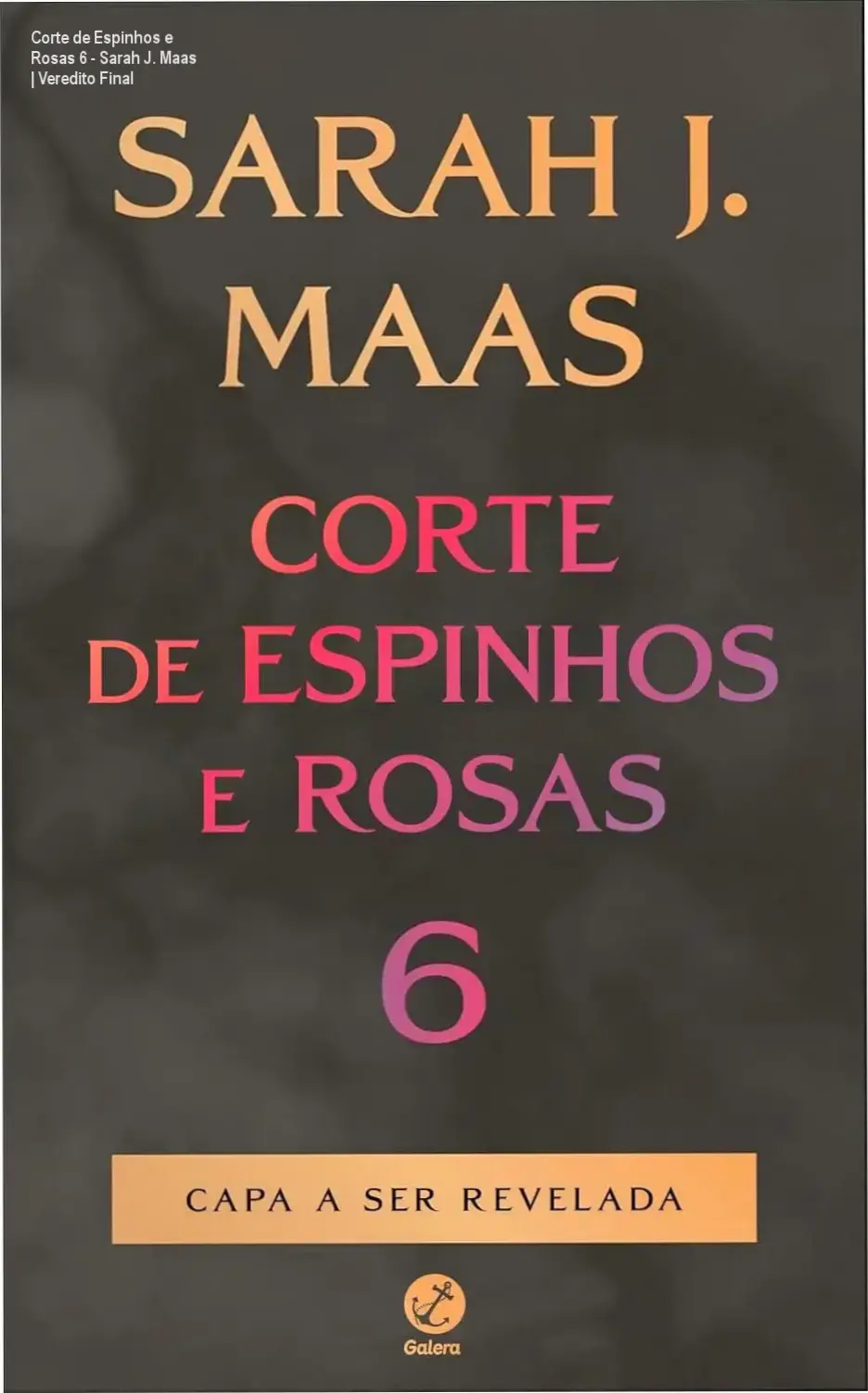
Capa do ebook Corte de Espinhos e Rosas 6 de Sarah J. Maas em dispositivo digital

Muita gente chega a Corte de Espinhos e Rosas esperando apenas um conto de fadas moderno ou uma releitura simplista de “A Bela e a Fera”. O equívoco é comum, mas a obra de Sarah J. Maas opera em uma frequência diferente, misturando política feérica com traumas profundos.

O livro não entrega apenas romance; ele explora a sobrevivência em condições extremas e a desconstrução da moralidade. Para quem busca entender por que a obra domina as redes sociais, vale a pena conferir a recepção e a disponibilidade da obra para entender esse fenômeno.

  • Expectativa: Um romance fantasioso leve e linear.
  • Realidade: Uma trama de sacrifícios, guerras e dependência emocional.
  • Impacto: A consolidação do gênero “Romantasy” no mercado editorial.

O desafio central aqui é a transição de perspectiva. O leitor é jogado em um mundo onde a beleza é a máscara para a crueldade, e a confiança é a moeda mais cara e rara de todas.

A obra funciona como um espelho para quem já se sentiu presa a obrigações familiares sufocantes, transformando a caçada de um lobo em uma metáfora sobre escolhas e consequências.

  • Conflito Interno: A luta entre o dever e o desejo.
  • Ambiente: A dualidade entre o mundo humano miserável e a opulência perigosa da Corte Primaveril.
  • Ritmo: Uma construção lenta que culmina em um clímax visceral.

Pronto para se aprofundar em “Corte de Espinhos e Rosas”?

Explore as edições disponíveis, confira o preço atualizado ou baixe uma amostra gratuita diretamente na Amazon.

Ver Amostra Grátis e Preço na Amazon

*Você será redirecionado para a Amazon. Como associado Amazon, podemos receber comissões por compras qualificadas.

Estilo de Escrita e Ritmo Narrativo

Sarah J. Maas utiliza uma escrita altamente sensorial e emocional. Ela não econom We need to produce second part of review. Must be in HTML only, using tags

,

<

h3>,

<

ul>,

  • , ,

    <

    table class=”wp-block-table is-style-stripes” style=”width:100%; border-collapse: collapse; margin: 25px 0; font-family: sans-serif; border: 1px solid #dee2e6;”>,

    ,,. No markdown or h1. Must have exactly 1 affiliate link contextual in the entire block, placed in the last paragraph of the first section (PERFIL DO LEITOR, CUSTO-BENEFÍCIO E CONCLUSÃO EDITORIAL). Also must have exactly 1 CTA button in the card HTML (which is provided already). But we need to output the block of continuation based on the directive. The user says: “Escreva o bloco de continuidade baseado estritamente na diretriz acima. Entre direto na resposta das perguntas, sem introduções.” So we need to output the second part of the review (the section described) plus the card? The directive includes both sections: 1. PERFIL DO LEITOR… and 2. CARD DE VEREDITO EDITORIAL FINAL COM BOTÃO CTA. We need to generate the block of continuation based on the directive. Likely we need to output the entire content: the second part of the review (the section 1) and then the card HTML. Must obey rules: exactly 1 affiliate link in the text (the link must be contextual and placed in the last paragraph of that section). Must use exactly 1 link tag … but we have to use the provided link? Actually the provided link is an image URL, but they said “Link de afiliado disponível” is an image URL. But for the affiliate link we must use the URL from [LINK DE AFILIADO DISPONÍVEL] which is an image URL, but they want a link tag with that URL? Probably we need to embed that URL as the href for the affiliate link. However the affiliate link should be contextual and placed in the last paragraph of the first section. Also we must not create any other links. Also we must not invent URLs. So we must use exactly that URL: https://m.media-amazon.com/images/I/61VEcbThq+L._SL1500_.jpg . That’s an image URL, but it’s not a typical Amazon product link; it’s an image. But we can use it as the href for the link tag. It will be weird but we follow instruction. We also need to include exactly 1 CTA button in the card HTML (the provided card already includes a button with href=”Link_afiliado”. We need to replace “Link_afiliado” with the actual affiliate URL? The instruction says “Insira o seguinte bloco HTML responsivo (contém EXATAMENTE 1 botão CTA e nenhum link no texto interno do card)”. The block includes a placeholder “Link_afiliado”. We need to replace it with the actual affiliate URL (the same as used earlier). So the href of the button should be that URL. We must not include any other links. So the only tags allowed are: one contextual link in the last paragraph of the first section, and the button link inside the card (which also uses the same URL). That’s okay: that’s two tags? The rule says “Insira EXATAMENTE 1 link de afiliado contextual no texto”. That’s the one in the last paragraph. The button is also a link but it’s not “link de afiliado contextual”? It is also a link but maybe considered part of the card; but they said “Insira EXATAMENTE 1 link de afiliado contextual no texto”. The button is also a link but maybe counts as a link; but they said “Insira EXATAMENTE 1 link de afiliado contextual no texto”. The button is not “no texto” but in the card HTML. The rule about links is separate: “1. Você tem permissão para criar no máximo de 1 a 2 links (tag ) ao longo de todo o seu bloco de respostas.” So we can have up to 2 links total. We will have the contextual affiliate link in the paragraph, and the button link in the card. That’s 2 links, which is allowed (max 2). So we must have exactly 2 tags total. One in the paragraph, one in the button. Good. We must not use any other tags. We must not use markdown or h1. Use

    <

    h3> allowed. Use

    ,

    <

    ul>,

  • , , etc. We must ensure each paragraph max 3 lines of text. In HTML, lines are not defined, but we can keep short paragraphs. We need bullet points every 2 paragraphs. So after every 2 paragraphs, we need a

    <

    ul> with

  • items. We need to include a FAQ formatted with highlights in bold. So we can have a section with questions and answers, using for highlights. We need to highlight profile of reader, who should ignore, common purchase errors, and include FAQ. We must not repeat information already covered at the beginning of the text (but we don’t have the beginning). We just need to produce the second part. We need to keep it between 300 and 650 words. Let’s aim around 400-450 words. We need to use bold for key concepts at start of sentences. We need to use bullet points every 2 paragraphs. We need to keep paragraphs max 3 lines; we can make each paragraph a short sentence(s). We’ll need to break into many short paragraphs. We need to include a bullet list after paragraph 2, after paragraph 4, etc. We need to include the FAQ maybe as bullet points? Or we can use

    <

    ul> with

  • items each containing a question and answer? Use for highlights. We need to embed the affiliate link in the last paragraph of the first section (the PERFIL DO LEITOR…). That last paragraph must contain the link tag. So we need to ensure that the final paragraph of that section includes with some anchor text. But we cannot use the image URL as link text? We can put the anchor text like “Verificar avaliações” but the href must be that URL. That’s okay. We must ensure we only have that one tag there. Then after that paragraph, we need to output the card HTML block. The card includes its own tag with href=”Link_afiliado”. We need to replace that placeholder with the same URL. So we will have but that seems odd as a button linking to an image. But it’s what they instructed. But the rule says “Insira EXATAMENTE 1 link de afiliado contextual no texto”. The button link is not “no texto”? It’s in the card HTML but still a link. However they allowed up to 2 links total. So we can have both. Now we must produce the HTML block with the card exactly as given, but replace “Link_afiliado” with the actual URL. Also we must not add any extra attributes or text. Now we need to structure the content. We need to start directly with the content, no intro. We need to use

    <

    h3> maybe for section titles? Not required but we can use

    <

    h3> for headings. We need to ensure bullet points every 2 paragraphs. Let’s plan paragraphs: Paragraph 1: Intro about target reader. Use bold at start. Paragraph 2: Continue. Then bullet list after 2 paragraphs. Paragraph 3: Talk about who should ignore. Paragraph 4: Common purchase errors. Bullet list after 2 paragraphs (i.e., after paragraph 4? Actually bullet list after every 2 paragraphs, so after paragraph 2 and after paragraph 4, etc. We need to include FAQ maybe as bullet list. We need to keep total paragraphs maybe 8-10. We need to embed the affiliate link in the last paragraph of the first section (the PERFIL DO LEITOR…). That last paragraph must be the final paragraph before the card. So after that paragraph, we output the card HTML. Thus the last paragraph of the first section must contain the affiliate link. It should be a short paragraph (max 3 lines). It must contain the tag. Now we need to ensure we have exactly 1 bullet list every 2 paragraphs. So we can have bullet lists after paragraph 2, after paragraph 4, after paragraph 6 maybe. But we need at least bullet points at each 2 paragraphs. The instruction: “Inclua listas com marcadores (bullet points) a cada 2 parágrafos, no mínimo”. So we must have bullet lists after paragraph 2, 4, 6, etc. We can include multiple bullet lists. Now we need to keep each paragraph max 3 lines. We’ll keep them short. Now we need to ensure we use for key concepts at start of sentences. Now we need to produce HTML only, using allowed tags. We cannot use

    <

    h2> or markdown. We can use

    <

    h3> for section headings maybe. Now let’s craft. We’ll start with

    PERFIL DO LEITOR

    maybe. But we need to not repeat info already covered at the beginning; we don’t have beginning, but it’s okay. Now let’s draft: Paragraph 1: Leitor ideal is someone who enjoys deep narratives. Use bold at start. Paragraph 2: Summarize value. Then bullet list after 2 paragraphs. Bullet list items: maybe “Perfil: amante de tramas complexas”, “Valor: alto retorno emocional”, etc. Paragraph 3: Who should ignore: those expecting practical manual. Paragraph 4: Common errors: expecting step-by-step guide. Bullet list after 2 paragraphs (i.e., after paragraph 4). Provide bullet list of errors. Paragraph 5: FAQ with bold highlights. We need to embed the

  • Veja também